 Dolpho
6 Freestyle Swimming Drills for Beginners
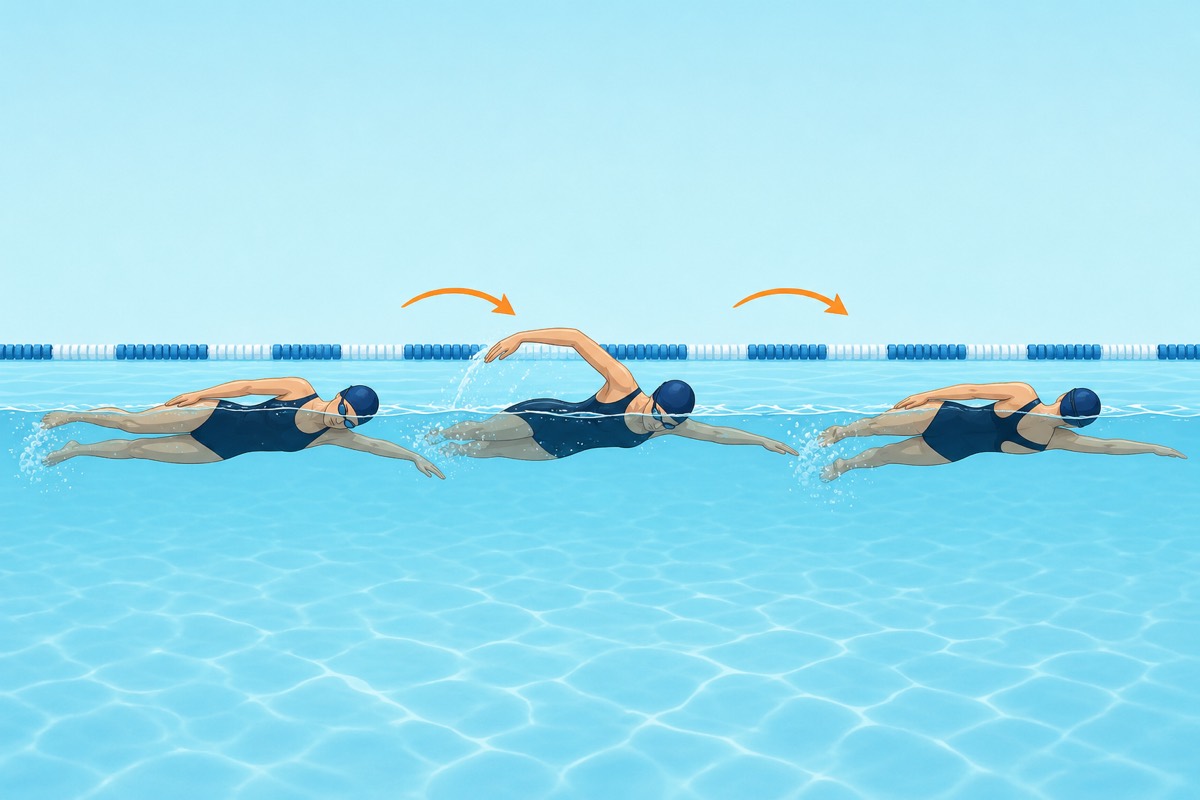
Drills split freestyle into pieces you can practise one at a time. A few lengths of drills at the start of each swim do more for your technique than another kilometre of the same old stroke. These six cover the problems beginners run into most: sinking hips, short strokes, rushed breathing and crossing over.
Do drills slowly and use fins if you have them. Fins keep you moving, so you can focus on the movement instead of staying afloat.
1. Side kick
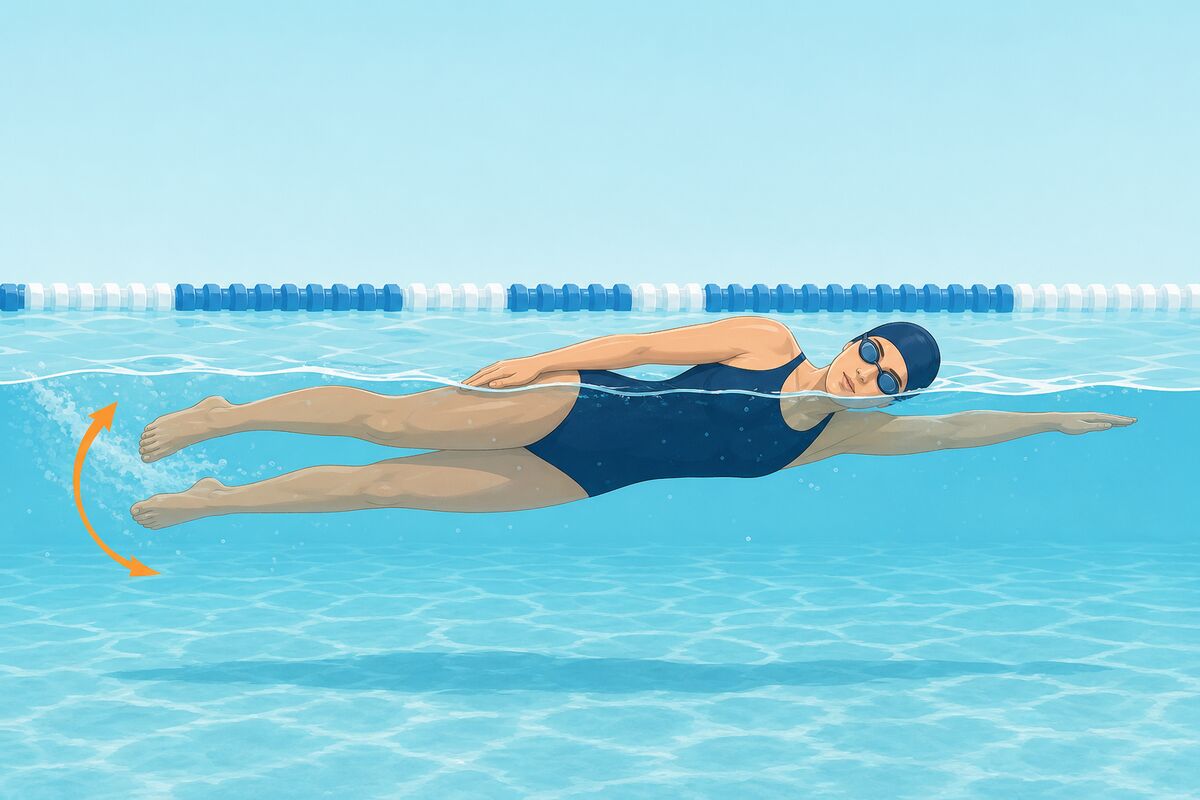
Kick on your side with your lower arm stretched forward, your top arm resting on your hip and your face down. Roll your head up to breathe when you need to, then back down.
What it fixes: body position and rotation. It teaches you to breathe by rolling, not lifting.
Try it: 4 × 25, switching sides each length.
2. Catch-up
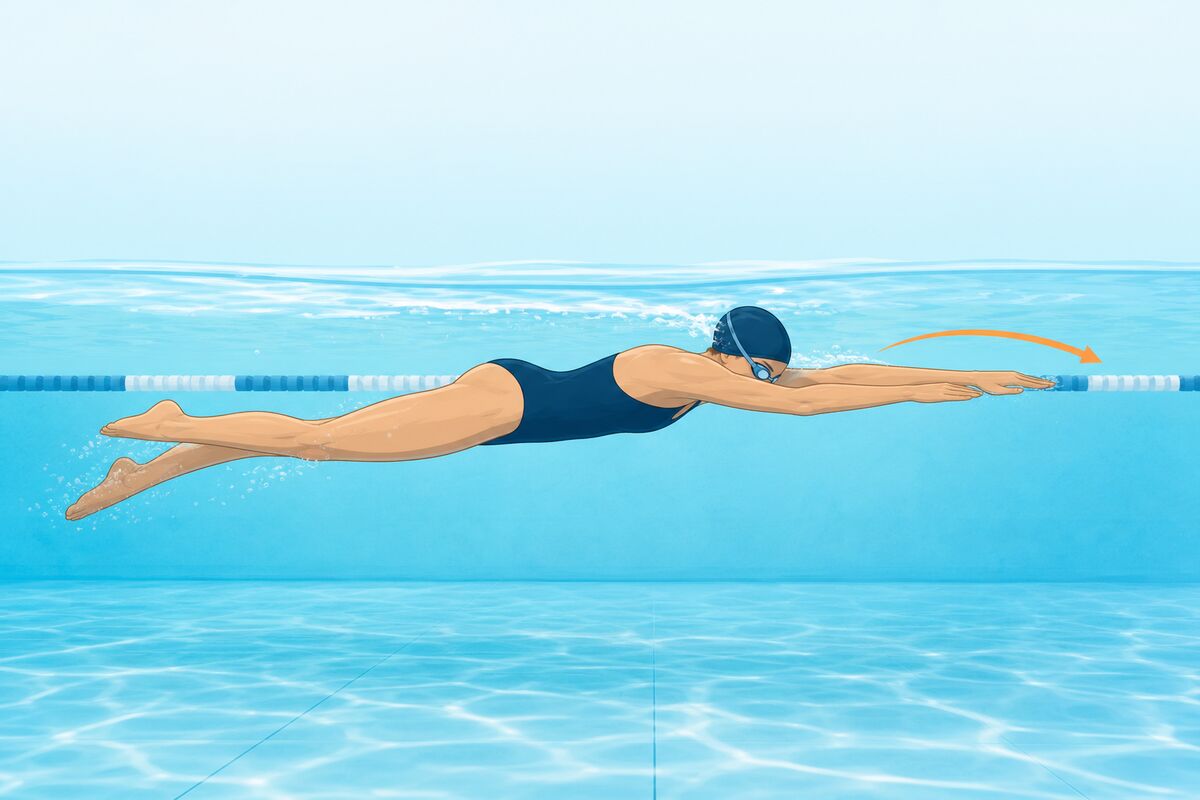
Swim freestyle, but leave one hand stretched out in front until the other hand arrives and touches it. Then that arm starts its pull.
What it fixes: short, rushed strokes. It makes you glide and reach, and the slower rhythm makes breathing easier.
Try it: 4 × 25 easy.
3. Single-arm freestyle
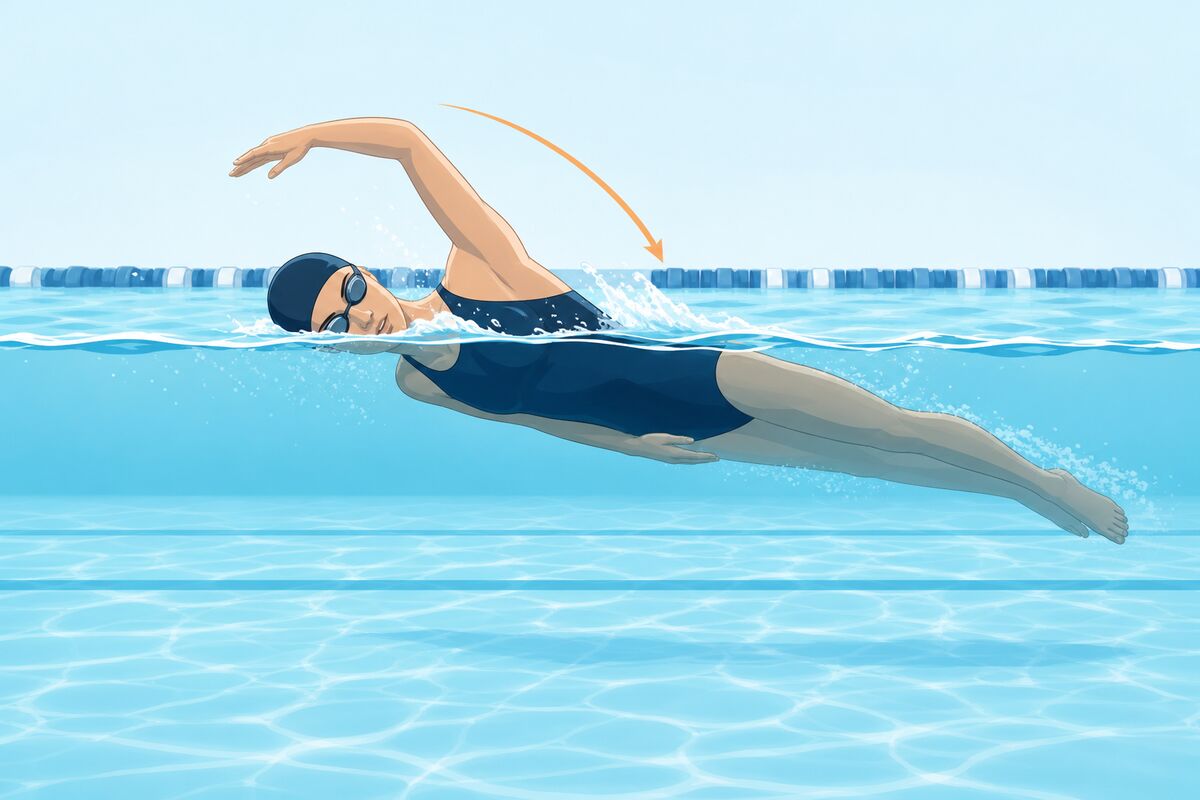
Pull with one arm only. Keep the other arm by your side (harder) or stretched out in front (easier). Breathe to the side of the working arm.
What it fixes: the timing between your arm pull and body roll, and a pull that's weaker on one side.
Try it: 4 × 25, swapping arms each length.
4. Fist drill
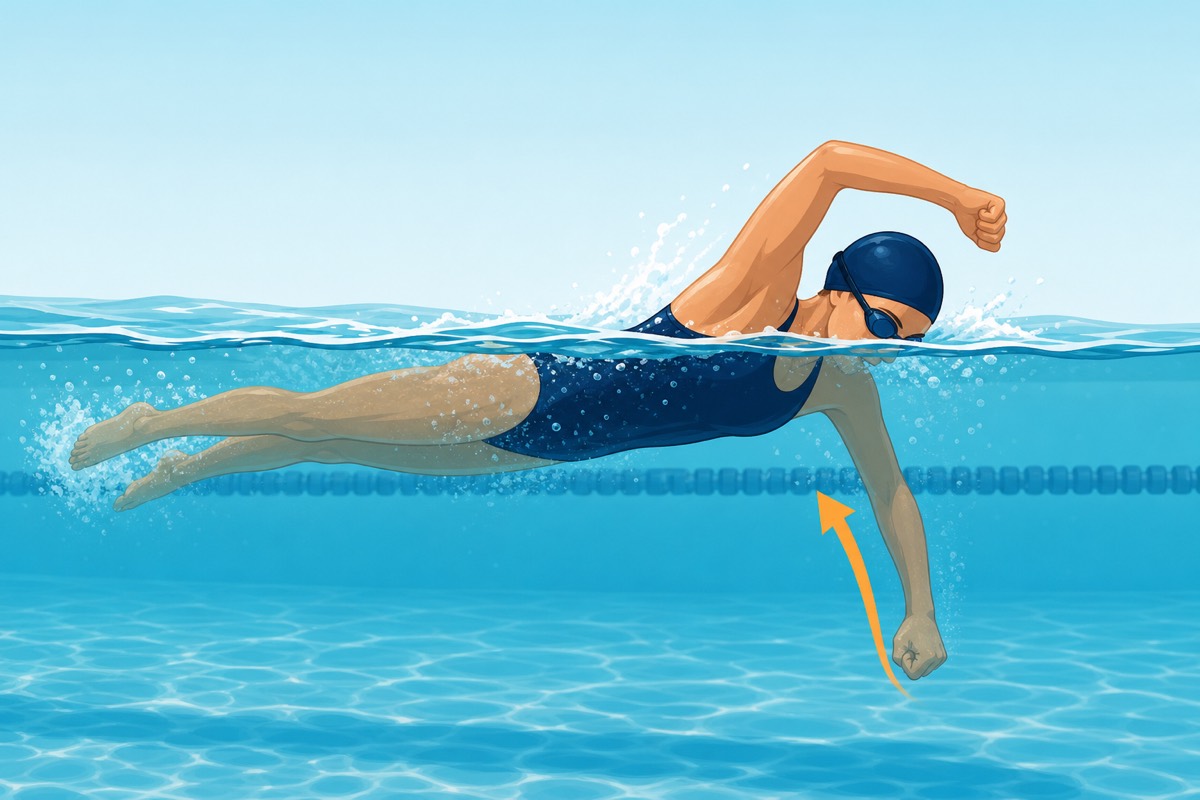
Swim freestyle with your hands closed in loose fists. You'll feel less grip on the water, so your forearms have to do the work.
What it fixes: a dropped elbow. When you open your hands again, they'll feel huge.
Try it: 2 × 25 fists, then 2 × 25 normal freestyle to feel the difference.
5. Fingertip drag
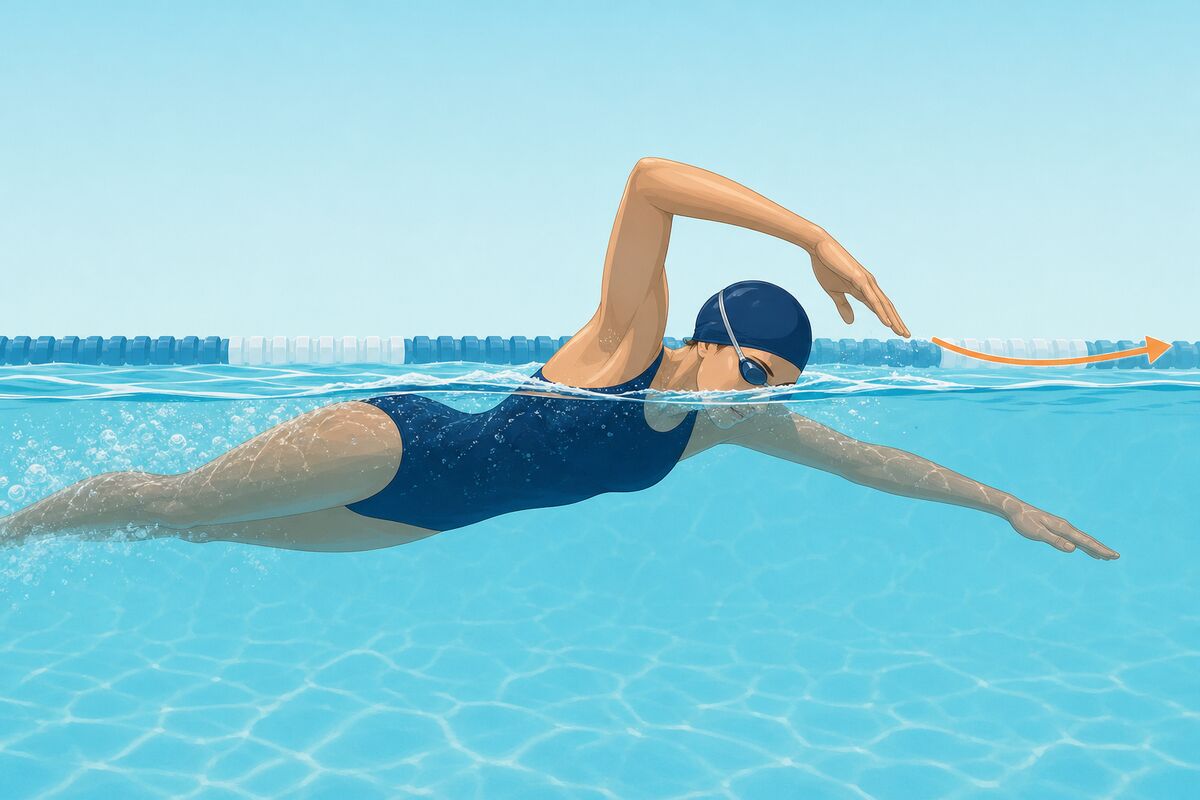
As each arm recovers over the water, trail your fingertips along the surface from your hip to the front, keeping your elbow high.
What it fixes: wide, swinging arm recovery that pulls you off line and crosses over in front of your head.
Try it: 4 × 25 easy.
6. Head-up freestyle
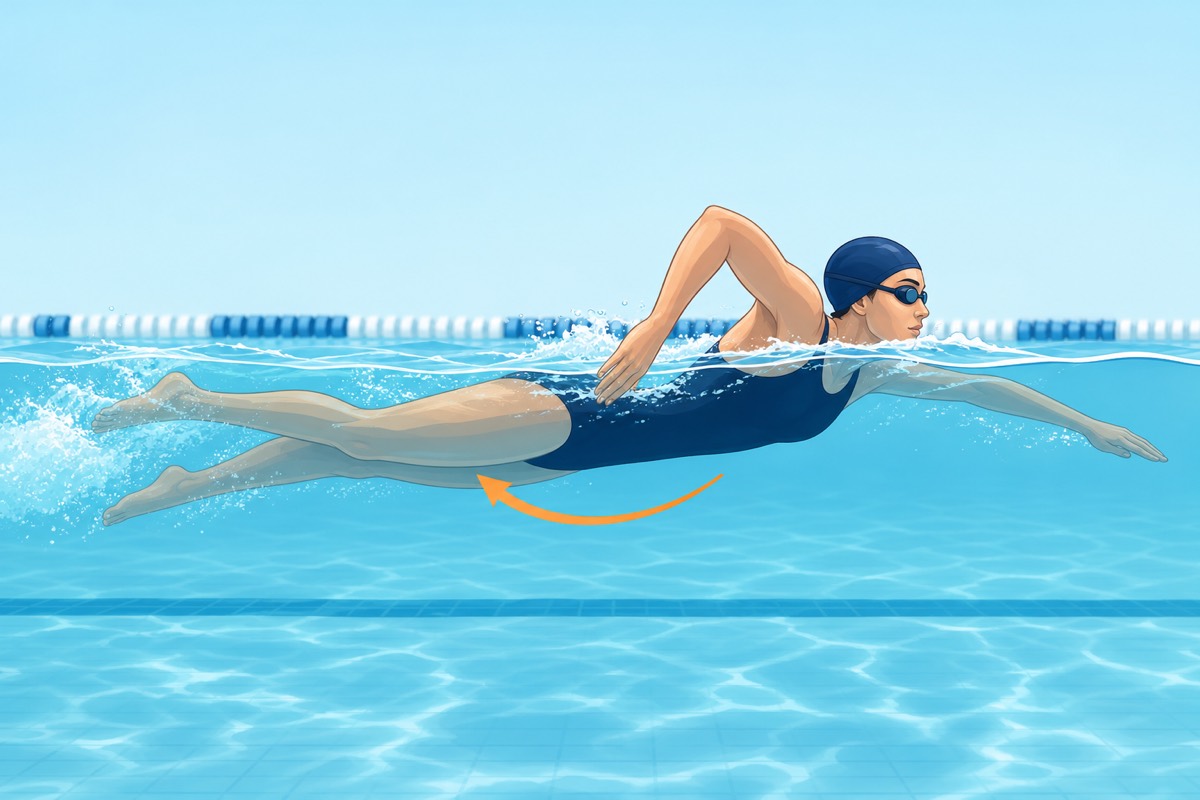
Swim freestyle with your chin just above the water, looking forward. It's tiring, so keep it short.
What it fixes: crossing over and a weak catch. Your hands have to press down and back to keep your head up. This is also how open-water swimmers sight.
Try it: 4 × 15 m, then finish each length with normal freestyle.
A sample drill set
Add this between your warm-up and main set, around 300 m:
| Set | Drill | Rest |
|---|---|---|
| 4 × 25 | Side kick, switching sides | 20 s |
| 4 × 25 | Catch-up | 20 s |
| 4 × 25 | Drill of your choice, then swim the last 10 m normally | 20 s |
Focus on one drill a week rather than all six at once. Pick the one that fixes the thing you notice most. If breathing is what limits you, start with our freestyle breathing guide. If you're still building up distance, the beginner swim workouts include drills along the way.
Questions
How often should I do swimming drills?
A few lengths at the start of every swim is ideal, usually 100 to 300 m after the warm-up, while you're fresh. Short and regular beats one long drill session.
Should I use fins for drills?
Fins are a big help, especially for side kick and single-arm drills. They keep you moving so you can concentrate on the movement. Over time, try some drills without them.
Which freestyle drill is best for beginners?
Side kick. It teaches the body position and rotation that everything else builds on, including breathing to the side.
Can drills make me faster?
Yes, indirectly. Drills make your stroke more efficient, so each length costs less effort. That lets you swim faster and further with the same fitness.
Keep reading
Beginner Swim Workouts: 6 Pool Sessions to 1,000 m
Six beginner swim workouts that take you from short lengths with rests to a continuous 1,000 metres. Warm-up, main set and cool-down for each, with tips.
4 min read
How to Breathe While Swimming Freestyle
Out of breath after one length? Learn the freestyle breathing technique step by step — exhale underwater, rotate to breathe, find your rhythm — plus 4 drills.
3 min read